DAN PEARCE, SINGLE DAD LAUGHING—AND CRYING

Dan Pearce is a single father who blogs at Single Dad Laughing about his and his son’s “sometimes crazy, sometimes lame, hopefully sometimes interesting lives.” In Dan’s own words, “I tend to say whatever’s on my mind, for better or for worse. I tend to get all emotional and crazy and happy and sappy. I have a gift for ruffling feathers. I hope I have a gift for making people think and helping spread worthwhile ways of looking at things.”

Dan writes on a variety of subjects, often in a humorous way. Born in 1980, he’s a relatively young man. But his wisdom goes far beyond his years, as I learned last week when I discovered essays that are thought provoking, moving, commonsense, and wise. The subject: bullying. Because, beginning in fifth grade, Dan Pearce was a victim.

In his post “Memoirs of a Bullied Kid,” Dan describes his experience, then makes a suggestion that we reach out to the bullies as well as to their targets:

“And so, I will ask you now to not hate the bullies. Experience tells me that hating them, or being angry with them, will always make it worse. Instead, put your arm around them. Love them. Tell them that they are valuable. Tell them that you expect great things from them. They will stop the bullying. They will stop, because they will start to love themselves. And people who love themselves don’t bully others.

“And with the bullies, it’s really that simple. If they actually believe that somebody loves them and believes in them, they will love themselves, they will become better people, and many will even become saviors to the bullied.”

Dan also mentions that few bullied young people tell anyone about their situation, not their parents, classmates, teachers, counselors, or coaches. And if only one of those people took notice of the child’s anguish and reached out to the sufferer, further pain and suffering might be prevented.

“… it’s not generally the bullies that are killing themselves, slaughtering their schoolmates, or building bombs in their bedrooms. It’s the bullied that are doing that. And my heart literally is pounding through my chest right now because I know just how easy it would have been to prevent most of these incidents. I also know all too well, the consuming thoughts that constantly go through the minds of the bullied.”

This is precisely the message I wrote about in my post “Down and Dirty Rockers Take on Bullying,” the message rock and roll band Doug Ratner and the Watchmen share in their song “Bomb in the Backseat,” which has caused so much controversy that a television station banned the group from further appearances. (See “Rockers Against Bullying Get the Boot.”)

Dan goes on to say,

“So many kids would still be alive right now, if somebody, anybody, would have done something.So many beautiful, incredible, wonderful souls would still be walking among us if somebody, anybody, would have done something.…

“So, please, I beg you. If you’re an adult, put your arm around your own kids. Put your arm around your neighbor’s kids. Put your arm around every kid you can. If you’re a student, put your arm around the bully and the bullied. You simply don’t know what person needs to feel like somebody loves her. You simply don’t know what person’s life you will save by showing him that, today, you care. And tomorrow you’ll still care.…
“Please. Today, do something to save our youth from this terrible disease. Today, find a child or a classmate who is timid, shy, closed-off, or sad and do something, anything to help him or her feel love. Today, change the future for somebody incredible.”

There is a lot more of substance in Dan’s post. I’ve excerpted only a few comments from the five pages and I urge you to read the entire essay, as well as Dan’s subsequent post, “Bullies. ‘their not even human.’ ” The comments that followed the original “Memoirs” post were heartbreaking, and Dan addresses them in this one.

(I won’t go into the way society cautions against adults and teachers offering the kind of comfort Dan is recommending. I wonder if there is a correlation between the increase in school violence and the edict against teachers hugging their students. When I taught, hugs were allowed. I can’t imagine not being able to comfort one of my first or third graders by wrapping them in my arms. How do junior and high school teachers bear it?)

Dan’s next post on bullying, “Less Talk. More Walk,” discusses a misunderstanding that arose from the original “Memoirs.” Some readers thought he was leaving it up to the victims to end their torment by urging them to reach out to the bullies. Not so, wrote Dan:

“It is your job as parents, teachers, neighbors, youth advisers, and especially classmates, to offer each bullied kid an environment of trust. It is your job to create a safe place where they will find their voices. It is your job to fill each bullied child with empowerment and sufficient levels of self-love so that they can rise above their situations.

“Stop leaving the burden of fixing this on the bullied kids. That line of thinking is arrogant and self-serving, and quite frankly, lazy.”

In “Your @#&*% just might be the product of you,” Dan addresses the fact that most parents are willing to admit that their child is being bullied, but very few will admit that their child is a bully. Perhaps it’s time, Dan says, for parents to step up and take responsibility for their child’s behavior.

“What if the parent of a bully said, ‘my son might be part of the problem. I’m going to figure out why, and I’ll do whatever it takes to fix it,’ instead of “my son is not part of the problem. It is just kids being kids.…

“How do we not see? Our @&*% often is the product of us, at least partially. And until we all start admitting it, we aren’t going to see anything get better.”

In “The most troubling thing I’ve ever shared here on Single Dad Laughing…,” Dan touches on the lasting pain of having been bullied. The pain doesn’t end when you become an adult, so neither should the discussion:

“You see, as I work to make myself a good person, a better person, and the best damn person I can be, I have learned that all the darknesses of my teenage and adult life have been connected in one way or another to the bullying that I received when I was younger. I believe the bullying discussion shouldn’t end at high school. It shouldn’t really end at all. And anybody who has been bullied in the past who will tell you that it doesn’t affect them now, is simply unaware of how the pieces connect in their own lives. Because once you’ve been bullied, to some degree it affects you forever.”

In “Bullied, The Forgotten Memoirs,” Dan goes into how he has been affected over the long term and includes seventeen links to his experiences as a victim of bullying.

In one of his most moving posts, “I’m Christian, unless you’re gay,” Dan says we should reach out, not only to bullies or LGBT people, but also to anyone who is not accepted for being themselves, anyone who appears marginalized or dismissed. In a discussion with a young man, Dan was told,

“You don’t know what it’s like, man. You don’t know what it’s like to live here and be gay. You don’t know what it’s like to have freaking nobody. You don’t know what it’s like to have your own parents hate you and try and cover up your existence. I didn’t choose this. I didn’t want this. And I’m so tired of people hating me for it. I can’t take it anymore. I just can’t.”

How do you respond to that?”

Dan’s answer comes from the scriptures of every major religion:

“The greatest spiritual leaders in history have all preached love for others as the basis for all happiness, and never did they accompany such mandates with a list of unlovable actions or deeds. They never said, love everybody except for the gays. Love everybody except for the homeless. Love everybody except for the drug users. Love everybody except for the gang members, or those covered in ink, or the spouse abusers. They didn’t tell us it was okay to love everybody with the exception of the ‘trailer trash,’ those living in poverty, or the illegal immigrants. They didn’t tell us it was okay to love everybody except for our ex-lovers, our lovers’ ex lovers, or our ex-lovers’ lovers. The mandate was pretty damn clear, wasn’t it?

Love others.

Period.”

Love one another. Simple. Direct. Dan’s message isn’t new. But he states it from his heart.

“Come on. Don’t we understand? Don’t we get it? To put our arm around someone who is gay, someone who has an addiction, somebody who lives a different lifestyle, someone who is not what we think they should be… doing that has nothing to do with enabling them or accepting what they do as okay by us. It has nothing to do with encouraging them in their practice of what you or I might feel or believe is wrong vs right.

It has everything to do with being a good human being. A good person. A good friend.

That’s all.

To put our arm around somebody who is different. Why is that so hard?”

It shouldn’t be hard. And it should get easier with practice.

Last week, Dan received a follow up to an earlier post. He wrote about it in “A Teen’s Brave Response to “I’m Christian, Unless You’re Gay.”  A Christian mother wrote that her son had been given an assignment to respond to Dan’s essay. The mother’s reaction had not been positive. She believed Dan’s post was an attack on the family’s beliefs and that Dan was promoting homosexuality. Against her wishes, her son wrote the essay. His words changed his life and his mother’s life.

“You see, Mr. Pearce,” wrote the mother, “you are right. It’s not about what other people do. It’s about whether or not we are loving them. Nothing else matters at all. And it took all of this for that to finally sink in.”

I’m not going to reveal the contents of the young man’s essay. Please, go to Single Dad Laughing and read the complete blog post of “A Teen’s Response,” as well as the other posts linked here. I believe they will move you. Make you shed a tear. And, perhaps, change you. For the better.

P.S. I’ve quoted freely from Dan Pearce’s posts here, but since he encourages his readers to share, I’m certain he would be comfortable with this usage.

BULLY IN PIGTAILS

In an earlier blog, A Good Left Hooks Has No Gender, I wrote about girls who bully. Today, following a similar theme, my guest, fellow writer Suzanne Santillan, shares a story about when her son was bullied by a girl at school.

When she’s not busy with her two sons, her husband, the dog, Buddy, and a turtle named Dave, Suzanne works as a freelance graphic artist and blogs with partner Sarah Womes Tomp at Writing on the Sidewalk. And she even finds time to write books. Her first picture book, Grandma’s Pear Tree (Raven Tree Press, 2010), is the winner of the Golden Moonbeam Award.

­­­­­­­­­­­­­­­­­­­­_________________________________________________________________________________________

 The Bully in Pigtails

The first sign of trouble was when my 11-year-old son returned home from school with ripped knees in his pants two days in a row. He claimed that he had fallen down, and knowing how he liked to hurry from destination to destination, we didn’t question his answer. He had been in middle school for only a few months and it seemed like he was still adjusting to the larger school and even larger student body. But we decided to watch him a little closer.

The next day, in addition to his ripped knees, his hands were scuffed and he had a bruise on his elbow. This was more than a clumsy boy; this was the sign of a boy being pushed around. After dealing with his injuries, I sat my son down and asked him what was going on. He told me that he was having a problem with one of the girls at school. She would catch him as he walked down the hall and push him from behind. He was very distressed because we had always taught him to treat girls with respect and that you do not hit them.

We discussed some possible strategies to deal with the situation and hoped for the best. He came home the next day with two skinned knees, a cut on his arm, and broken glasses.

It was time for Mom to get involved.

Armed with the broken glasses and righteous indignation, we made an appointment with the school guidance counselor. My son was instructed to select the picture of the girl from a page of photographs. I was surprised by his selection. She looked like an angel, with blonde hair, big blue eyes, and her hair in pigtails. This was his bully?  The counselor nodded her head knowingly and said that this is what she expected. This girl, who looked like an angel, was notorious for terrorizing the boys. She especially liked to target the boys like my son who had been raised to treat girls with respect, because they didn’t fight back. I was appalled. How could teaching your son to do the right thing put him at risk for harm? And what could I do about it?

After the school visit, we sat down with my son and revised some of the teachings we had taught him. We explained that while we didn’t want him to hit anyone, he did have the right to defend himself. If he was being pushed around by a girl, he had the right to grab her arms to tell her to stop and then go ask for help. It wasn’t a perfect solution, but it has served him well.

And the bully? She was suspended for her role in beating up my son. The school stressed to the parents that if we wanted to have them repair the broken glasses, they would have to pay for the repairs. She began attending a new school a short time later.

Was our solution perfect? No. But it did give my son a new confidence that helped him face other situations that he encountered. I came away with a new understanding that bullies come in all shapes and sizes and sometimes they even wear pigtails.

 _________________________________________________________________________________________

Suzanne’s story is a perfect example of why parents must be vigilant: children don’t always share what’s going on. Often they believe it’s embarrassing to admit they need help. And if it’s a girl who’s bullying a boy, that can be even more humiliating.

In Suzanne’s case, she stepped in and stood up for her child, and that made all the difference. But does it always work out so well?

Do you know of any situation where a parent stepping in actually made it worse for the bully’s target?

Does age make a difference? Is it safer to step in for younger children, whereas intervening might make it worse for older ones, who are expected to take care of themselves?

I can’t speak for other parents, but one of the most difficult challenges for me as a parent was knowing when to step in and when to back off. I know there were times when I embarrassed my son by trying to find a solution instead of giving him the tools to fight his own battles.

By realizing the rules needed to change, Suzanne adapted, and gave her son tools to use if a similar challenge ever arose again.

What tools have you given your children to fight back against a bully?

Are they working?

CAN EMPATHY BEAT BULLYING?

A great deal of thought goes into trying to come up with ways to prevent bullying. Some people believe charging perpetrators with a crime and holding them accountable in the courts might work. Others believe children should be taught to fight back and stand up to a bully. Others, that it’s safer to ignore the abuse and walk away.

Eric Dawson, leader of Peace First, believes the best way to end bullying is to build empathy in all children, to teach them how to be peacemakers and to also give educators the ability to integrate this type of learning into the school curriculum and social culture. As a fellow of Ashoka, an organization that envisions a world in which everyone can create change, Dawson hopes to do just that with students: to enable them to feel and act on empathy for one another and those around them, giving them, in Dawson’s words, “the belief that they can effect change in their proximal world—that they can reverse the cycle.”

Toward that goal, all students in his Peace First program between pre-kindergarten and fifth grade, spend one hour each week on lessons focused on learning how to resolve conflicts, to help one another, and to make changes in their schools and communities. Peace First also works with teachers and support staff to develop ways to celebrate peacemaking, to help them be more supportive, and to recognize positive, normal behavior. In other words, “kids will be kids” or “just stay away from him” are no longer acceptable responses when possessing knowledge of bullying on the playground or in the classroom.

Dawson’s approach seems to be working. There has been a 60 percent reduction in violence and a 70- to 80-percent increase in positive behavior in schools participating in the Peace First program. Children are beginning to step in and break up fights, include others in their activities, and help one another. With 95 percent of the students reporting that they understand how others feel, it’s clear that empathy has increased.

Victims of bullying often see themselves as weak and helpless. Teaching kids they can make a difference and giving them the knowledge of how to do so, puts the power into their hands. It improves their self-image and teaches them they aren’t helpless. Apparently, Eric Dawson’s Peace First program is having good results and is an effective way to decrease bullying behavior.

Fortunately, Peace First is not the only organization trying to make a difference in the bullying arena. Other innovative people, teachers, and principals understand that effective learning can’t occur in a school atmosphere that reverberates with fear. They, too, are working to build empathy in their students and in those who surround them.

Another organization, Ashoka Changemakers, is calling on parents, teachers, innovators, and students to let Changemakers know about any program the schools have developed that can advance empathy in their environment. Changemakers is currently asking people to enter their best ideas in their Activating Empathy competition, with prizes of up to $110,000 available to fund the winning programs. Unfortunately, the competition is accepting entries only until March 30, 2012, so you’ll have to hurry. It might be worth it. Even if your idea doesn’t win, everyone will benefit from spreading the word about worthwhile programs that are effectively decreasing bullying in our schools.

Finally, for those of you in the Southern California area, this coming Saturday, Voices of Women (VOW), the Race Human Relations and Advocacy Program of the San Diego Unified School District, and the United Women of East Africa are offering a free workshop called STRATEGIES FOR SAFE SCHOOLS & ANTI-BULLYING. A panel of experts will address bullying in schools, how to prevent it, and how to replace it with harmony and conciliation.

Saturday March 31, 2012 from 9:30am-1:00pm
at the San Diego Workforce Partnership
3910 University Avenue in the 3rd Floor Conference Room
San Diego, CA 92105

With all the efforts being aimed at the eradication of bullying, surely, together, we can make a difference.

Added 4.15.12

For another take on using empathy to fight bullying, read my post Dan Pearce, Single Dad Laughing–and Crying.


“BOMB” TAKES OFF

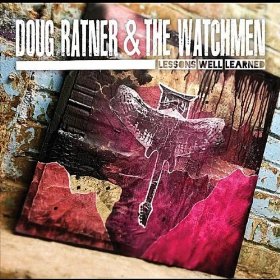
Last week I wrote a post (“‘Down and Dirty’ Rockers Take on Bullying”) about the new EP (“Lessons Well Learned”) being released by the rock band Doug Ratner and the Watchmen. The songs on the EP speak out against bullying and other problems young people encounter in today’s society.

The following day I wrote a follow-up post (“Rockers Against Bullying Get the Boot”) that discussed the controversy surrounding one of the songs: “Bomb in the Backseat.”

A few days ago, the EP was released for download on Amazon. Yesterday Doug wrote to say that “Bomb” had climbed to the #2 position on the list of Amazon’s Hottest Releases in the classic rock genre. That’s great news for the band and gives hope that the positive message they hope to convey will be spread far and wide.

Not knowing the background of the song, some of those who download “Bomb in the Backseat” will no doubt think it promotes violence. Here’s hoping those people also download the entire EP, or at least the companion song to “Bomb,” “Ghost in the Mirror,” which conveys a story arc about a  young man who is bullied and, as a result, goes on to build the bomb in the backseat.

We’re all on this journey together, and kindness will move you farther along the road than will cruelty. Young people need to be aware of the consequences of their cruelty, which is so frighteningly portrayed in “Bomb.” Reaching them through one of their favorite media—music—is effective and might make them stop and think before tormenting a fellow sojourner.

I hope “Lessons Well Learned” sells a ton of copies for Doug Ratner and the Watchmen, who are reaching out to young people and trying to make a positive difference in their world.


BORN THIS WAY

Lady Gaga is a beautiful, unique entertainer, whose heart must be as big as her talent. She recently started Born This Way, a foundation whose goal is to empower kids and encourage a more understanding and accepting environment for them in and out of their classrooms. Or, as the foundation itself states, to create a braver, kinder world “where differences are embraced and individuality is celebrated. The Foundation is dedicated to creating a safe community that helps connect young people with the skills and opportunities they need . . . [where] everyone has the right to feel safe, to be empowered and to make a difference in the world. Together, we will move towards acceptance, bravery and love.”

The foundation isn’t exclusively targeting bullying, but eliminating bullying is one of its goals, perhaps inspired by the treatment Lady Gaga received from her high school classmates.

As Lady Gaga tells it, boys threw her in a trashcan and she was called rude names in front of large groups of people. Although a straight-A student, it became difficult for her to focus on her schoolwork and she ended up being embarrassed and ashamed of who she was.

Kathleen McCartney, dean of the Graduate School of Education at Harvard, which is partnering with Lady Gaga and her foundation, announced, “If you don’t feel safe as a child, you can’t learn.”

Of course, she’s right. Bullying leads some young people to suicide, but I suspect a far greater number of those targeted simply fail to live up to their academic potential, because they’re too miserable and frightened to pay attention in class and absorb the material

And the scars don’t go away, Lady Gaga says. “When certain things are said to you over and over again as you’re growing up, it stays with you and you wonder if they’re true.”  (“Born to Not Get Bullied,” Nicholas D. Kristof, N.Y. Times, 2/29/12)

A child should feel safe from fellow classmates in his or her room and when going to and from school. I applaud Lady Gaga’s efforts to make a difference. She’s starting with those who are targets, encouraging them to accept themselves as they are and to realize they are valued and worthwhile human beings, who deserve to be treated with respect and  kindness. But she’s also reaching out to those who bully by sharing the message that it can be cool to offer that respect and kindness to others.

With someone as revered by young people and as famous and powerful as Lady Gaga at the helm, I have high hopes for the success of her Born This Way Foundation. You can help by joining the foundation. At the Born This Way site, you can learn about the three pillars of the foundation and the ways you can help promote the message and support the cause. You can hear the stories of some of those who Lady Gaga aims to help.

Join.

Together, we can make a difference.

ROCKERS AGAINST BULLYING GET THE BOOT


On Monday I posted a blog called Down and Dirty Rockers Take On Bullying by my guest Doug Ratner, lead singer of the rock band Doug Ratner and the Watchmen. Yesterday, I received an email from Doug with the following:

“. . today we played “Bomb in the Backseat” on a popular morning show and … the management was not pleased. They kicked us off the show, and told us we’re not allowed back. … a lot of uptight people don’t seem to understand the message of that song and the current state of society. Talk about ‘bullying’ and ‘not accepting.’… It’s going to shine light into the fact that our music is serving a purpose and in no way are we condoning violence or terrorism.”

The goal of Doug Ratner and the Watchmen is to address issues such as bullying, depression, teen suicide, gender roles, and greed. “Bomb in the Backseat, from the band’s upcoming EP “Lessons Well Learned,” is a companion piece to “Ghost in the Mirror,” a softer, heartbreaking song about a boy who is an outsider, a ghost in the mirror. “Bomb” describes what happens when this one young man is made to feel bullied, outcast, and alone.

There is no doubt “Bomb” can be considered a controversial song, especially without knowing the background and motivation behind its creation. Always pairing it with “Ghost” would eliminate misinterpretation. Even opening the song with the quiet first verse of “Ghost in the Mirror” before breaking into the hard rocking “Bomb” would ease this misunderstanding:

You wake up today and get ready for school

Head to the bathroom, to find a way to look cool

Cuz lately the boys have been teasing you

And all the girls have been laughing too

You gotta find a way to change your face

You’re sick and tired of feeling out of place

But should an artist have to do that? Shouldn’t each song be allowed to stand on its own?

I’ll admit to having conflicting feelings about the effect of lyrics on a young person’s mind. When my children were young, I used the saying GIGO: garbage in, garbage out. I likened their brains to Jell-o® that hadn’t yet set. Whatever went in remained after their brains had gelled, to be with them for the rest of their days. So I encouraged them to put in only positive, uplifting messages. I doubt it made a difference, but I felt I was doing my job by objecting to lyrics that used foul language or that glorified violence. I don’t believe I was all wrong, since popular songs seemed to have taken a leap from the days of:

Oh, my pa-pa, to me he was so wonderful

Oh, my pa-pa,to me he was so good,

(“Oh, My Pa-pa” by Eddie Fisher)

to

Kill yer parents / burn their bodies

bury the ashes …

yer parents are f**king blind

and their ideals are all wrong.”

(“Kill Your Parents” by No Cash)

Music in my day was all about drugs, peace, and free love. Most young people I knew didn’t get high, go out protesting, or get it on simply because they were exposed to music that seemed to approve and promote that behavior. Perhaps music validates those who are already on a particular path or have a certain propensity, but I don’t believe the music causes the behavior any more than reading murder mysteries turns people into murderers or using contraception turns people into sex addicts. So I don’t believe those who hear “Bomb,” even without the context of “Ghost in the Mirror,” are going  to build a bomb and become a terrorist.

Doug Ratner

Doug Ratner and the Watchmen call themselves a “down and dirty” band, and “Bomb” is a down and dirty song. The beat and rhythm get in your head and stick. So do the words, certain phrases going deep, and twisting. But the actions the words describe don’t come to the forefront of your consciousness. The raw emotions of a young man in pain do.

I know “Bomb in the Backseat” would be painful to hear for anyone who had a loved one die from a similar act of violence. But that’s precisely why it was written and why it needs to be heard. Young people need to think of the consequences of their behavior and of their mistreatment of others. Hearing all the songs on the upcoming EP “Lessons Well Learned,” how many kids who are “only teasing” or taunting will stop and think how their victim feels and what might be the consequences of the cruelty? How many young people who head to school with a gun do so because they’ve been bullied? If they hear this music, how many might stop and think that perhaps someone in this cold, unfeeling world understands?

Doug Ratner and the Watchmen understand. They ache for the bullied ones who hurt, and, through their music, hope to reach those who cause the pain. But without “Bomb,” performed alone or in tandem, “Ghost” wouldn’t carry nearly as much weight. Hopefully such music will prevent songs like “Bomb in the Backseat” from becoming reality.

Sharing this message is a worthwhile goal. I’m not concerned about the lyrics used to share it, because the way social media spreads the message these days, it won’t take long for listeners to learn the true context and meaning of the song. I applaud Doug and the Watchmen for stepping up and taking the risk.

I’d like everyone to listen to “Bomb in the Backseat.”  Then I’d like to hear from you.


Does the song condone violence or terrorism?

Had it been played with its companion piece, “Ghost In the Mirror,” which describes the bullying received by the kid who eventually goes on to build the bomb, would the message have been clear and therefore acceptable?

Is the story arc between cause and effect clear or should the two songs always be sung in tandem? Or is it okay for “Bomb” to stand alone?

Any words of encouragement (or criticism) for Doug and the band, or do you agree that the proper action was taken by the television station’s management?

This is an important topic. Speak up.

“DOWN AND DIRTY” ROCKERS TAKE ON BULLYING

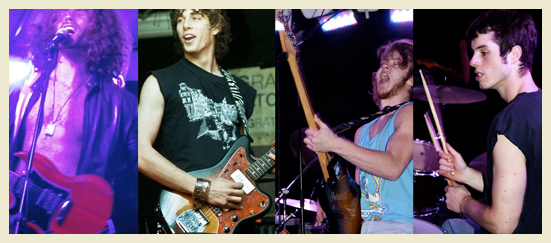
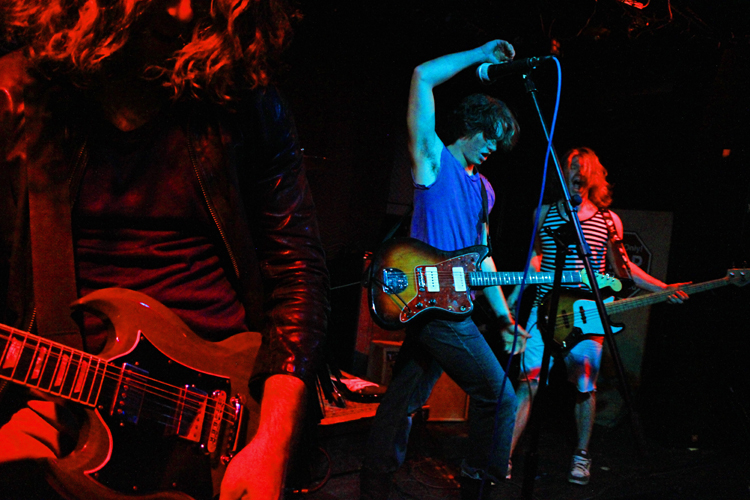
"Down and Dirty" Rockers, Doug Ratner and the Watchmen-- Mark, Jimmy, Doug, Austin

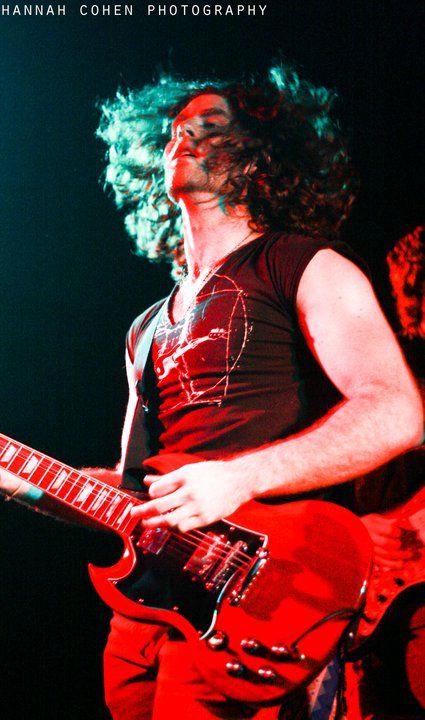
(All photos taken by Hannah Cohen, Mary-Hope Beaulac, or Michael Elfman and used with the permission of Doug Ratner.)

Through the centuries, music has been used to promote a cause or simply to bring listeners’ attention to an injustice that needs correcting. Folk music has a history of tackling politics, labor rights, and civil rights. In my day, rock ’n’ roll took on the task of protesting against war and for peace. What better way to reach the youth than through their music of choice? It’s reassuring to know the tradition is continuing, with organizations such as Musicans for a Cause, joining together to support the fight against autism, homelessness, animal welfare, hunger, etc. In the words of the organization:

“Musicians for a Cause was founded to harness the power of music to inspire compassion and support for worthy causes. We engage songwriters with nonprofit organizations to provide music that brings life to the causes they support.

“We do that by bringing together artists who are interested in making a difference with their music and providing an effective platform for them to connect with organizations who can use their songs for a greater good.”

Then came Lady Gaga’s Born This Way organization, to fight “youth bullying, meanness, and cruelty”.

Now there is another voice being raised to take up the battle against bullying.

Enter Doug Ratner and the Watchmen, a self-described “down & dirty rock ’n’ roll band” from Northampton, MA, whose slogan is “Outsiders welcome. Weirdness encouraged,” and whose goal is to “make music that inspires young kids, and even adults, so they too may have hope in the dark corners of their minds. Rock n’ roll is one of the most powerful forces in the world, and we feel it’s necessary to stand up for what is right.”

I’m pleased to have the lead singer of the Watchmen, Doug Ratner, guest on my blog today to explain the group’s music and how they hope to make a difference.


I’ll never forget this moment until the day I die. We just had an assembly from a hilarious, African-American speaker named Mark Brown. The focus of his talk was on bullying and that old saying, “sticks and stones may break my bones, but words can never hurt me.” Brown argued–and I agree to this day–that words are very hurtful, perhaps even more hurtful than any sticks or stones could be. Even as a 5th grader I could understand the weight of the message he was trying to deliver to us. Words can hurt.

After the assembly, I remember sitting in the lunch room with three other kids, one of whom was not the nicest. We’ll call him “Jack.” Jack noticed that another student, “Miles,” was sitting by himself, eating alone, and just minding his own business. Jack began to openly make fun of Miles for being weird and having no friends. I was in disbelief. After such an amazingly powerful speech, you would think that any child (or adult) could be a little bit nicer! Well no, not Jack. I got up from the table, walked over to Miles, sat down with him and we finished lunch together.

Over ten years later, being an accomplished song writer and the leader of a popular down & dirty rock ’n’ roll band, I certainly know the power of words. As a writer, you have a responsibility to write lyrics that satiate your own soul, but also connect with the listeners, whoever they may be. It’s a very tough thing. You can’t be too complex or too simple. You have to find the right combination of reality and fantasy to allow your fans to escape from their everyday lives, into somewhere greater.

For the past seven or eight months, my band and I have been in the studio, finishing up our newest release, “Lessons Well Learned.” This EP (musical term for extended play) is not just rock ’n’ roll. It’s rock ’n’ roll with heavy social commentary on it. It’s a concept EP, focusing on different societal issues that we feel needs illumination in today’s media. Issues like bullying, depression, teen suicide, gender roles, and greed. Rather than giving you a blow by blow of each song, I’d like to draw attention to two particular songs, “Bomb in the Backseat” and “Ghost in the Mirror.”

“Bomb in the Backseat” tells the story of a young, reclusive teenager, who feels the world has turned against him. As a result of his anger and paranoia, from an app on his phone he has learned to build a bomb and plans to blow up everyone. Right away, as a reader or listener, you probably think this is a sick and twisted notion. Why would you want to write a song about this? Enter, “Ghost in the Mirror.” This song has the same character as “Bomb in the Backseat,” but it explains how he became the way he did. The first lines tell it all;

You wake up today and get ready for school

Head to the bathroom, to find a way to look cool

Cuz lately the boys have been teasing you

And all the girls have been laughing too

You gotta find a way to change your face

You’re sick and tired of feeling out of place

This kid needed help, but he never got it, and you see what he becomes in “Bomb in the Backseat.”

And that’s the beauty of rock ’n’ roll. You can make taboo and topical statements because they need to be made. Why hide from the truth that overwhelms society? Kids need help and if they don’t get it, terrible things can happen.

My goal is to have listeners connect to the lyrics of “Ghost in the Mirror” and put their hearts in it. From the cover photo or at a live concert, they will see that the words are being sung by a 6’2” muscular lead singer, with insane hair and red jeans, looking as weird as can be. Leading a band of misfits and hooligans, but completely and utterly devoted to the idea that rock n’ roll has the power to heal your soul.

Feel free to contact me directly at doug@dougratner.com and like my band on Facebook, www.facebook.com/dougratnerandthewatchmen.

Doug Ratner

Here’s a salute to young people using their talents to make a difference in the world. Check out the website for Doug Ratner and the Watchmen and support them in this worthwhile effort.

Thanks, Doug, for being my guest and for doing what you do. Keep on keeping on.

Click to listen to “Bomb in the Backseat.”


ANIMAL BULLIES

A monk seal named KE18 attacking a younger monk seal.

My last post, Together, We Can Make Miracles Happen, addressed how widespread bullying is and described a recent incident in South Korea where two teenagers went to prison for bullying a classmate.

Unfortunately, bullying isn’t limited to the world of humans. Anyone who ever owned or observed a flock of chickens knows well the horror of the pecking order. When I was in elementary school, my older brother decided to make money by raising fryers. I will confess to trying to rescue the tormented baby at the bottom of the pecking order, watching helplessly as it ran and ran trying to escape the others, who always managed, despite my efforts, to corner it and peck off its feathers. The poor chick died, at which time the one second from the bottom of the pecking order took its place and became the flock’s target. I was relieved when the flock was old enough to become dinner and my brother didn’t replace it. A rapid whack across the neck with a hatchet seemed less cruel than being pecked and bullied to death.

Other species bully, too. Female banded mongooses torture pregnant relatives until these victims are often traumatized enough to self-abort their litters.

Fish living on dying coral reefs bully and drive away smaller fish to keep diminishing resources for themselves.

Goats pick on other goats.

Dolphins bully porpoises, sea turtles, and manta rays.

Bullying exists even among pinnipeds. Hawaiian monk seals are the most endangered marine mammal in the United States, their numbers dropping from 15,000 to around 1,100. They are expected to become extinct in 50 to 100 years. Monk seals spend most of their time at sea, mostly coming ashore to give birth. Fishing nets, humans, and sharks are their biggest threat—except for one group of seals, who had another, more uncommon enemy.

Nine-year-old monk seal KE18 weighs 400 pounds. He’s a troublemaker who lived on the Kure Atoll and liked to bully other monk seals, doing his part to ensure the seals’ extinction happened on schedule. His targets were usually newly-weaned pups and juveniles. Typical bully behavior.

KE18’s bullying was first observed by researchers in 2010. In 2011 he stepped it up to scratching, biting, and holding other seals under water. Even when researchers intervened, KE18 would merely wander down the beach and pick another victim. They estimate he attacked and injured 10 of the 13 pups born at Kure and two additional juveniles. He’s also the suspect in the death of two other pups. Some of those were females who would have reproduced to help keep the seals from disappearing. Scars on KE18 are evidence that he might have been bullied as a pup by older males and is now repeating the behavior.

KE18 pinning a young monk seal. (Photo credit: NOAA)

Researchers decided the time had come to put an end to KE18’s bullying. The best way, they decided, was to euthanize him. But when they arrived at Kure, KE18 had disappeared, a mind reader as well as a bully. He turned up 55 miles away at Midway Atoll. Midway has an airport, making extraction possible, and when a spot opened up at the Waikiki Aquarium, the decision was made to save KE18. He was captured and flown to Honolulu, where he was scheduled to move on to UC Santa Cruz for study, then back to Hawaii. With KE18 out of the picture, perhaps the monk seals on Kure Atoll have a better chance of survival—at least in the short term. Read the full story and learn more.

Bullied animals tormenting succeeding generations is also evident among Nazca boobies, sea-going birds living in the eastern tropical Pacific, nesting on the Galapagos Islands, and on islands off the coasts of South America. Scientists have learned that booby chicks abused by older birds are more likely to grow up to become abusers themselves. “Juvenile birds maltreated by older, non-relatives grow up to become more violent towards other chicks, providing the first evidence from a wild animal that, as in humans, ‘child abuse’ can be socially transmitted down the generations.” (Matt Walker, Global Animal)

A Nazca booby adult attacking a chick. (Photo credit: Jacquelyn Grace)

There are interesting implications in this knowledge. Are young bullies the target of abuse at home, which repeats generation after generation? Scary to think about, but a strong reason to put an end to bullying. And what else might we learn from observing animal bullies? That the smallest, most vulnerable creatures become targets? That seems to carry over to human behavior. That bullying is the result of evolution and is a natural instinct, as espoused by Assistant Professor Adrieeen Nishina of the University of California, Davis?

Humans can’t do much about bullying in the animal world, except where it exists due to human presence, such as coral reefs dying from pollution. But surely, whatever the cause, people can put an end to bullying within their own species. It’s a goal worth pursuing.

TOGETHER, WE CAN MAKE MIRACLES HAPPEN

Once again the Brownes of “Hagar the Horrible” cartoon fame are bringing bullying into the public eye. The February 19, 2012, Sunday comic by Dik Browne, showed Hagar’s son, Hamlet, watching the dog, Snert, pass by with a bone, only to see a much larger dog steal it away. At that point Hamlet comments, “Boy, bullying is more widespread than I thought.”

Sadly, Hamlet spoke the truth. A survey of youth in South Korea reported that in 2010, 22% reported having been bullied and 30% of those had considered suicide. In 2011, the number of those considering suicide had doubled. Officials blame the competitiveness of society and the educational system, which leads students to view each other as the competition, not as a friends.

The day after the Hagar cartoon appeared, a CCN story told of two 15-year-old South Korean boys who were sentenced to prison for three and three and a half years for bullying a classmate until he committed suicide by jumping off a building. He left behind a note naming his tormentors. The two bullies, neither of whom had a previous criminal record, forced their victim to play online games, then took the game winnings. They beat him frequently, stole food from his home, pushed his head into the sink, and humiliated  him by making him eat food off the ground.

Depending upon their behavior, the bullies could be out of prison in two years. They’ll have a criminal record that might follow them for the rest of their lives depending upon how Korea treats minors who offend, but they’ll once again be out in the world and walking around. We can only hope that the sentence they received from the Korean court, which took their cruel bullying and the resulting public outcry seriously enough to send them to prison, will have changed their behavior and their treatment of others. In the meantime, however, the target of their mistreatment will still be dead.

Prevention is preferable to punishment. The victim would still be living, and two young men with their lives ahead of them would not be in prison. The parents of the dead boy, both schoolteachers, are suing the school, its head teacher and principal, and the parents of both convicted middle school students. That should get the attention of a few folks and perhaps raise awareness enough to prevent a few others from following the same path as the two bullies. But how much better it would be to have bullying become extinct throughout the world.

One young South Korean who was bullied is working toward that goal. You can learn about his efforts in the video below. Then you can go to the website of Lady Gaga’s Born This Way Foundation and sign up to join the battle against bullying. Together, we can make miracles happen.

KID’S BOOKS ABOUT BULLYING

This is a short entry to announce that I’ve started a bulletin board on Pinterest where I pin books for children about bullying. I’m hoping this will be a convenient way for parents and teachers to locate a suitable title for a young reader. If you know of any published books on the topic that are well written and/or illustrated, feel free to email me the titles and I’ll consider adding them to my board. Please check out my Kid’s Books About Bullying board. If I get enough titles I may eventually create more boards and divide them into the appropriate age groups. Please send the title via e-mail rather than in the comments section. My contact information is in the tab above.