POTPOURRI: GLEE AND BULLY, THE MOVIE

Today’s post is a potpourri of a couple of items that deserve mention.

GLEE AND BULLYING: The Glee episode called “On My Way” that aired on February 21st, included a bullying subplot in which the football-playing character David Karofsky, portrayed by Max Adler, attempted suicide when it became public that he is gay and the bullying began. There is some controversy about how the plot line shortchanged this story line by including so many other story arcs within the same episode. For one opinion, go to: Inside Pulse.

BULLY, THE MOVIE: Director Lee Hirsch and Harvey Weinstein put their hearts into the upcoming documentary Bully, which seeks to explain the power hold that bullying has over young children. Unfortunately, the Motion Picture Association of American (MPAA) has decided to assign an R-rating to the movie, which is specifically targeted for young people. In the words of Lee Hirsch: “I made BULLY for kids to see – the bullies as well as the bullied. We have to change hearts and minds in order to stop this epidemic, which has scarred countless lives and driven many children to suicide. To capture the stark reality of bullying, we had to capture the way kids act and speak in their everyday lives – and the fact is that kids use profanity. It is heartbreaking that the MPAA, in adhering to a strict limit on certain words, would end up keeping this film from those who need to see it most.”

Apparently the MPAA believes that hearing “f**k” will have a more negative effect on those under seventeen than will being bullied. The movie doesn’t release until March 30, so there’s time for MPAA to change its mind—or let the public change it for them. Tweet @MPAA to tell them to reconsider the BULLY rating.

For information on the movie, go to The Bully Project.

To sign the petition to change the rating, go here.


A PACIFIST’S ANGER

Today, I’m pleased to host my guest Alan Eisenberg, well-known founder and author of the blog, Bullying Stories: Dealing with Bullying from an Adult Perspective (www.bullyinglte.wordpress.com). Alan also does presentations on bullying and is working on a documentary called Bullying: Long Term Effects.

Just as research shows that the effects of divorce on the children involved are serious and linger long into adulthood, it is also revealing that the effects of being bullied also linger and cause difficulties. Bullying Stories has been instrumental in providing a safe place for adults to share their stories of being bullied and, hopefully, to help vanquish the pain.

__________________________________________________________________________________________

A Pacifist’s Anger by Alan Eisenberg

“Why are you acting so angry?” is a common question my wife asks. While I consider myself a pacifist, I find that I can also be angry. Inside, I feel the anger and rage and want to understand it, but I struggle sometimes to understand where it comes from. I just want peace. This bothered me for many years, but later, I came to realize what had happened. And, at least for me, it had much to do with my life from age 7 to 14, the years I was bullied.

In 2007, I realized it was time to confront the demon that had haunted me for almost 30 years. The demon’s name was bullying and the issue I needed to confront was my past experience with bullying and the belief that those years of being bullied had left long-term scars and effects on me. I also wanted to use the web as a means to share my experience and allow others to share as well. So I started the “Bullying Stories: Dealing with Bullying from an Adult Perspective” website (www.bullyinglte.wordpress.com).

I found out that I was not alone in wanting to share what happened to me and, in fact, a community of anti-bullying people surrounded me. Eventually, as some discovered my website and stories, they contacted me to share theirs. Karen Coombs was one and I am fortunate to have her as a partner in working toward a better solution to the issue of bullying. When she shared with me that she had written a book called “Bully at Ambush Corner,” I was intrigued. Then I found it was the story of a pacifist boy named Rocky who didn’t want to fight, but was confronted with a bully and needed a solution.

In Rocky, I saw a kindred spirit, a person who doesn’t want to fight. On my website, I share my stories of the times I dealt with bullies, whose bullying was very physical. I would constantly be surrounded and punched by a group of kids, while they taunted me. They were relentless, either making fun of my last name and calling me Iceberg, or other much harsher versions. I talk often about not wanting to fight and how my mom always told me to try to talk it out with them. Like Rocky, who just took the punches at times, I felt that fighting wouldn’t solve anything. So I didn’t. Instead, I let the fear grip me and let my easily emotionally influenced self deal with the pain and fear. I did this for years, running away from the issue and letting the “why me?” anger build.

I think I was picked on partly because I wouldn’t fight back, but mainly because I let the bullies affect me, and so found myself either crying or upset when they taunted me. My solutions during those years included hiding in school after the closing bell until all had left. When the coast was clear, I would walk in the woods to a path to get away from the school for fear that a bully was waiting for me around the corner. I talk about this story on my website and figured out that I lost 8 days of my life over the years avoiding bullies this way. But this wasn’t the only thing I tried. I also tried talking to the bullies, to administrators at the school, and to my parents. None of them could help though, because a bully can always lurk in a corner and find you when no one is looking. And they did just that.

So my fear led to anger and my anger could easily be misplaced when I felt threatened by others. My “fight or flight” instinct was damaged from the years of bullying and I would perceive disagreement as if a bully was coming toward me. Of course, I had no idea why I felt this way. Also, I had the pacifist’s emotions of someone who didn’t want to fight, but the anger of someone who was feeling threatened. If you haven’t experienced it, it’s hard to explain. But it was real; it is real. Finally, after many years and many attempts to not fight, I was forced to throw a punch when I realized it was expected of me in order to stop the bullying. I first punched someone when I was 11 and it felt terrible. But…the result was that that particular bully left me alone. Also, my friends were proud of me. It felt wrong in my heart, but it stopped that bully. Then I was 12 and did it again, and it stopped that bully. But it wasn’t fair. It hurt me to do it and it was the last thing I wanted to do. But I felt as if I was trapped in a box with no way out but my fists. My pacifist heart was shattered and my peaceful solutions seemed to all but disappear.

This haunted me and kept me up at night. I felt trapped in a cycle of violence to solve violence and decided on my next tactic: I’d pretend to be a bit crazy so others would leave me alone. I stared at someone and acted like I didn’t know what they were saying. Then I would respond in nonsensical ways. I brooded and shuffled my feet in the halls, behaving a little off, so others would leave me alone. This wasn’t all the time and with everyone, but mainly when around larger groups. I also wore dark clothes and weird shirts to give the impression that I was odd and a bit different. When I started 7th grade at age 13, this is how I lived my days at school. For the most part I was left alone, but eventually found others in the school who were either doing the same or really were a bit crazy. They, of course, became my kindred-spirit friends. Not the best friends a kid could have, but all I did have.

Unfortunately the bullying followed me in the form of a former best friend who said he was going to “kill me”. He was a big kid, much bigger than I, really mean and threatening. Using my new crazy tactic, I told his friends to tell him I had a knife and to leave me alone. He didn’t take the hint. So, gripped in fear of the impending confrontation, I found my mom’s sharp nail file and took it to school every day. The fear in me and the years of bullying made me feel there was no choice and I’d reach in my pocket and poke my finger daily with the sharp point of the file to remind me it was there.

I still walked the path around the school, and one day as I came up to the road, there was the bully and I thought he really would kill me. He yelled as much and started at me with his fists raised. I pulled out the file and cut him. I was sick to my stomach that it had come to this. For me to have peace, I had resorted to a weapon of violence. He yelled and I saw he was bleeding. I didn’t stop to see any more, but ran the mile to my house with him following me the whole way. I worried I had cut him badly. I didn’t know a file could do that much damage, and felt I would throw up from fear and panic. I got to my house with him still behind me. I shut the door with him pounding on it and yelling. He finally left. He didn’t come after me again and the school was abuzz with how crazy I was. No one bugged me again. Due to this experience, every time I hear of a boy or girl who brings a weapon to school who either used it or is caught with it, I wonder if they felt threatened and if they just wanted to protect themselves. Luckily, I moved away that summer, never to look back and never to be bullied much again, but I wonder how far I would have gone to protect myself had I stayed.

But those years from age 7 to 14 had done long-term damage. At the time, the late 70s, there were no anti-bullying programs in the school. There were no specialists to talk to me about it. “Kids would be kids” and we’d all grow up. And we did grow up, and now I have learned that they are studying the long-term damage to children who suffered from bullying and to those who were doing the bullying. It’s now considered a form of Post-Traumatic Stress Disorder (PTSD) and more and more people are talking about it. For that I am grateful.

As an adult, it is hard to make giant leaps of change in how we act and cope with our feelings. Those impressionable years of our youth help form who we become. I still consider myself a pacifist who believes that peaceful negotiation should work. But my years of dealing with bullying make me doubt myself and also act in ways I still feel bad about. I can feel angry and threatened and not know why. Due to years of being surrounded by bullies and not able to get away, I can feel panic in confined space and want to run. I can feel self-doubt and low self-worth. But, I have worked hard to realize where these feelings come from and to try to overcome them. Slowly but surely, a little bit every day, I try to be better. I sometimes wonder how Rocky in Karen’s story copes as an adult.

So sometimes I find myself as the angry pacifist. Sometimes my wife doesn’t understand why I feel threatened or angry. I just know I do and I learn to recognize it. I still consider myself a peaceful person who doesn’t see using my fists or a weapon as a way to solve everything. I still feel sick thinking of my past and how I solved bullying issues in my youth. But I have an outlet in the website I started those years ago, and reading others’ stories and the studies being done on the issue of bullying has helped me realize that others, like me, are angry pacifists and use that anger to try to solve the issue of bullying…one day and one step at a time.

Alan Eisenberg
Founder/Author – Bullying Stories: Dealing with Bullying from an Adult Perspective
www.bullyinglte.wordpress.com

TEACHERS WHO BULLY

“What rights does a child have when a teacher ‘bullies’ a student?”

This question popped up in an on-line discussion with bullying expert Jonathan Cohen, Co-Founder and President of The National School Climate Center (NSCC), who was recently named a consultant to President Barack Obama for the new federal bully prevention partnership.

Stuart Twemlow, MD, a psychiatrist who directs the Peaceful Schools and Communities Project at the Menninger Clinic in Houston, defines teacher bullying as “using power to punish, manipulate, or disparage a student beyond what would be a reasonable disciplinary procedure” and says it gets little attention. His study, published in The International Journal of Social Psychiatry, hints that the problem may be more common than people believe. His anonymous survey of 116 teachers at seven elementary schools revealed that more than 70% believed bullying was isolated. But 45% admitted to having bullied a student.

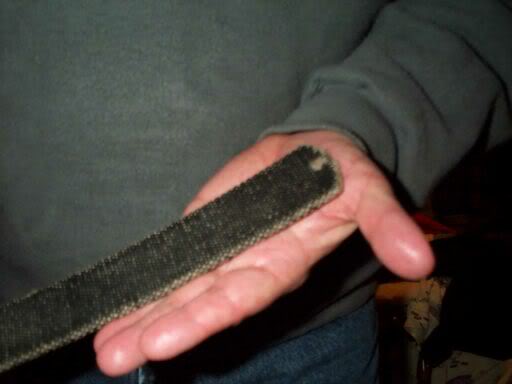
Thinking about teachers and bullying, I wondered where discipline crosses the line from reasonable discipline into bullying, and my mind immediately tripped back to my school days and the teachers that still stalk roam the hallways of my memory. It was not unusual in those days for a misbehaving student to be given “the strap.” This occurred most often in upper elementary and junior high school. Examples of offences deserving of this treatment could be insolence, abusive language, or smoking. Sometimes the student was sent to the principal’s office, where the punishment was delivered in private, although the sound of a vigorous strapping and the resultant howling echoed through the hallway of our small school. Moments later, even the toughest student would creep back into the room with reddened eyes awash in tears, while we all stared.  

But sometimes the teacher performed the strapping in front of the class, no doubt as an example and a warning. The teacher grasped the student by the wrist, palm up, and, depending on the seriousness of the infraction, applied a few or more good thwacks to the offending palm with the strap. I always assumed that holding the culprit’s wrist was done to prevent him or her (usually him) from jerking his hand away and avoiding the anticipated smack. But perhaps it was to prevent a teacher’s errant aim from striking that sensitive part of the student’s anatomy, although I saw plenty of kids try to pull their hand away as the strap fell—or even push their arm forward in the hope the teacher would hit their own hand. Some teachers definitely applied more strokes and with more fervor than others, leading one to believe they might have enjoyed delivering the punishment.

In yesterday’s climate, those teachers were merely considered harsh disciplinarians and not bullies. In today’s world, they would likely be charged with assault.

I never received a strapping. Seeing a classmate punished in that way turned my stomach, and I could easily imagine how actually being strapped would make me feel. As a result, I became the perfectly behaved student. What first set me firmly on the road to good school behavior though, were a couple of experiences I had in early elementary school. Today, they seem minor, but the fact that I still recall them and the feelings they engendered, tells me they were major to my young self.

Although we lived in the country, for three years I attended school in town. Lunchtime lasted an hour to give town students time to walk home for lunch. I ate at school. One day I got permission from my mom to leave school over lunch hour and walk to the candy store downtown. It seemed miles, but was probably three blocks away. So off I went with a friend. Cautious country kids that we were, we made it safely across the first street, but when we got to the end of that block, cars were parked so near the corner we couldn’t see both ways down the street, so sneaked out and peered around the cars to see if it was safe to cross. When we saw a car coming, we squealed and jumped back onto the sidewalk. We weren’t about to take a chance on getting run over.

We didn’t know a teacher was behind us. The meanest, nastiest substitute teacher ever created.

She caught up to us on the way back to school, accosted us there on the sidewalk, grabbed each of us by an arm, and accused us of playing in traffic by jumping in and out of the street. When she finished yelling at us, she raised our arms in the air, and slammed them together. By that time, I was humiliated and nearly in tears, but was too stubborn to let her see. I tried to explain that we weren’t playing in the street, only being extra cautious, but she wouldn’t allow me to speak.

The next year I had an encounter with another substitute teacher. (What was it that made me a target of subs when my regular teachers adored me?) We were standing in line to return to our classroom. I turned my head to look at something, not noticing that the line had started to move.

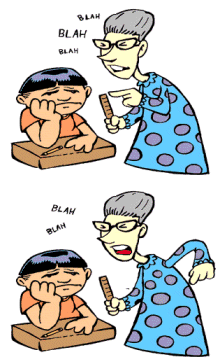
Whack! Pain screamed through my left arm. “Pay attention!” the sub snapped, brandishing the yardstick she always carried and with which she had hit me. Ordinarily, the smack wouldn’t have been so excruciating, but the day before, I’d gotten a vaccination that had left my arm so tender and swollen I couldn’t raise it from my side. She had landed on the precise location of the needle stick. Perhaps she had called my name and I hadn’t noticed. However, another brief second or two and I would have seen the line moving or the person behind me would have poked me, and the wake up whack would have been unnecessary. Bully? I think so. Or perhaps only sadistic. For certain, her reputation among students was almost as terrifying as that of the first sub who scolded me.

Later, in seventh and eighth grade, we had a principal who surely fell into the category of sadistic bully. Looking back, I believe he was mentally ill. Big bruisers were brought to their knees from being strapped by him. His other method of discipline was to get rough with troublesome boys. I remember him knocking a boy down and kicking him. A few years later, after I had left that school, I saw him with his two young daughters walking in a residential neighborhood. The girls were around 6 and 8. One was pushing and one pulling a big red wagon loaded with a tall box. From the effort and the little progress they were making, the load appeared to be too heavy for them. Their father, my former principal, strolled along behind, yelling at them to work harder. The look on their little faces was heartrending. His discipline crossed the line into bullying—and worse, child abuse.

Have you ever been bullied by a teacher or a principal? I’d love to hear your story.

Are you a teacher or principal? Have you ever encountered bullying by teachers?

When I was studying to be a teacher, we received not a single class in how to discipline or how to manage out-of-control students. I could have used such a class. Are future teachers taught these classes today? I hope so. Teachers deserve all the help they can get. And so do their students.

For more information or for tips on what to do if a teacher is bullying your children, click the following links:

Web MD

Dr. Deb

Wrights Law Way

Education News

CAN BABIES TAME BULLIES?


OnlineCollegeCourses.com is a resource to help learners gather information and make the best choices for their on-line education. But last week the site listed twenty methods schools are using to combat bullying. Some are extremely innovative, such as incorporating babies into the classroom to encourage compassion. Other include A Thin Line, an iPhone app for people being bullied, and music—using catchy tunes to teach young students about the dangers of bullying.

For the complete listing of the twenty techniques, go to the Online College Courses website. There are some wonderful suggestions there. Eventually, we might not need to teach our children to get in the bully’s face and yell, “F*** YOU, YOU MISCREANT!”

Well, one can always hope.

HOW VIOLA DAVIS BESTED HER BULLIES

On  January 23, 2012, I wrote about a mother who had encouraged her children to stand up to bullies by saying “F*** You, You Miscreant!” in order to get immediate attention from adults and possibly confound the bully and end the mistreatment. The entry received comments from people who had used the technique with good results.

Then yesterday, on Entertainment Tonight, I saw Viola Davis, Academy Award nominee for her starring role in The Help, speaking about how she was bullied by classmates in elementary school.

The actress, who was born in South Carolina and grew up in Rhode Island, said, “I have stories of being spit on. You have to realize I was in a predominantly white culture … And third grade was the worst because every day after school I would wait at the door and the bell would ring. And as soon as the bell rang I ran as fast as I could from the front door to my house, which was at least a mile away, because I would have eight to nine boys with sticks, bricks, anything they could find, who were ready to kill me.”

After getting no help from her teachers, Viola complained to her mother, who made a suggestion. The next day, instead of running home after school, Viola walked, allowing the bullies to catch up to her. When they did, she pulled out the crochet hook her mother had given her and said, “If you touch me, I’ll stab you.” She said that was the end of it.

Apparently, confronting the bullies worked for Viola Davis.

So far, I’ve heard only positive results from standing up to bullies. But surely this technique doesn’t get good results every time.

Did you or anyone you know ever try this only to have it backfire? I’d love to hear from you, too.

“I DON’T KNOW WHY I DID IT.”

I can only imagine how Michael Palomino felt when he first saw this video of his 17-year-old son, Raymond, front and center, in a mob of kids beating another boy his age. Someone in the group of seven bullies filmed the beating and put it on YouTube, where it went viral. Viewers saw it, recognized Raymond, and told Michael, a single father and sheriff’s deputy. Although Michael said the attack was in retaliation for an earlier one, where the beating victim and his friends jumped Raymond and a friend after school, and the victim wasn’t badly hurt, Michael Palomino promptly phoned 9-1-1 and turned in his son.

That was obviously the right thing to do. Bullying should never be tolerated or allowed to go unpunished. And this type of mob behavior of seven against one is reprehensible.

But was it the right thing to do? Raymond, who has no previous criminal record according to his father, was arrested, charged as an adult, and jailed on a $100,000 bond. The other six, who are fifteen and sixteen, and who kept their faces covered during the attack, were charged as juveniles.

Unable to pay the bond, Raymond’s father had to leave his son in jail. Raymond, whom his lawyer refers to as a “little kid” and a “peanut,” is locked up with adult offenders, where he requests word search puzzles to pass the time. Requests to lower the bond and to release Raymond with an electronic monitor were recently denied.

Michael Palomino said online threats are being made against Raymond, saying he will get beaten if he gets out of jail. So now Michael fears for his son in jail and out.

“I don’t know why I did it,” Raymond apparently told his father. And knowing what we do of how the adolescent brain doesn’t function at full capacity, that is probably true. But it doesn’t excuse the behavior. It only leaves a lot of questions.

Did Raymond tell his father about the first confrontation with the boy who was attacked? If he had and the parents had stepped in at that point, perhaps this beating might have been avoided.

If the video hadn’t gone viral, would Michael Palomino have turned in Raymond (assuming he even learned of the attack), or was it only the social pressure of people knowing about the beating that motivated him? Or would he have kept quiet and handled it on his own with appropriate punishment and apologies?

Would Michael have turned in his son if he’d known he would be charged as an adult?

I prefer to believe the father did what he did because it was the right thing to do. But was it the only thing to do? Thanks to the Internet, Raymond would have been arrested regardless of his father’s actions. And Michael is surely having second thoughts, now that his son sits in an adult jail, missing school and receiving threats.

I tell myself I’m the kind of person who always does the right thing, even when the right thing is the most difficult thing to do. But in this case, I wonder.

What would you do? If you knew your child had participated in the beating of another, would you call the police? Or would you handle it on your own—if the ever-nosy lens of a camera and the Internet allowed you the option of keeping it private?

I do know one thing. If I chose to call the police, I’d call a lawyer first.

F*** YOU, YOU MISCREANT!

Wendy Thomas, a New Hampshire mother, writer, and blogger is fed up with passive anti-bullying campaigns that mean well, but apparently—since the bullying continues—produce few results. Calling herself one angry mom, Thomas is ready to fight back.

Wendy Thomas’s crusade was triggered when a young child in her town died, and bullying was rumored to have been the cause. At that time she decided, enough already! She informed her daughters that from that time on, if they or anyone they knew were ever bullied, they would get in the bully’s face and shout as loudly as possible, “F*** YOU, YOU MISCREANT!”

The results, in Thomas’s words, would be as follows:

“Bullies are a bit on the dumb side, they are not going to know what a miscreant is. When they get that confused look in their face, wipe your hands of them, and walk away. You’ve just won; you’re way smarter than they are.

“Also, if you yell this at the top of your lungs, there is not a teacher or adult within 100 feet who is not going to notice and come over to see what is going on. Forget waiting until recess is over to tell a teacher that someone has bullied you, you go ahead and get their attention exactly when it happens. Trust me, this little gem of a phrase is going to get an adult to notice.”

Normally, Thomas wouldn’t encourage the use of four-letter words, but feels it is justified in this situation. I’m inclined to agree. I do believe, however, that Thomas’s statement that bullies are on the dumb side, might be an oversimplification, especially since I have known bullies who weren’t short on brain cells. But since bullying is dumb behavior, I won’t quibble with her description. Chances are she’s correct that the average bully would be flummoxed at being called a miscreant.

This in-the-bully’s-face approach is demonstrated in the television show Parenthood, during an episode called “Sore Loser,” which originally aired on November 15, 2011. Young Max, who has Asperger’s syndrome, is being mocked and subtly bullied by boys Max thinks are being friendly. Max’s mother, Kristina Braverman, picks up on the bullying and confronts the main instigator, getting in his face and telling him to knock it off.

“Max’s teachers,” writes Sheila Wagner, Assistant Director at the Emory Autism Center at Emory University in Atlanta, “have not yet picked up on the bullying, but as a mother protecting her cub, Kristina does so quite quickly.” According to Wagner, Kristina does the right thing in facing down the bully, since Max is like a “lamb amongst lions.”

Kristina concluded her confrontation with the bully by saying, “Be a friend. Be a friend, not a bully.”

Perhaps this approach does work. One writer named babylonlegg commented on the Parenthood site, “My son was being bullied some 20 years ago – teacher did nothing – school district did nothing. When I noticed the bullies walking on my block I pulled the car over, rolled down the window and said if any of you ever bully my son again your mothers will be scraping you off my tires – low and behold – no more bullying and I invited them to a summer bbq. All ended well!”

I’ll admit to cheering when Kristina tied into the bully. So I rather like this idea, especially if it gets results. It appeals to my mama lion side and my well-buried confrontational nature. In the right setting, I think it might be worth a try, even if it means giving a child permission to turn the air blue.

But does using the technique turn the abused or his defender into a bully?

What do you think?

Would you encourage your child to say “F*** YOU, YOU MISCREANT!” to a bully?

Would you get in the bully’s face yourself and be the lion defending your cub?

Have you a tale of your own to tell?

Please share.

For the full post by Wendy Thomas, go to her blog, Lessons Learned From the Flock.

Rocky and Martin

Martin Luther King, Jr.

“Our lives begin to end the day we become silent about things that matter.” MLK

In my book Bully at Ambush Corner, Martin Luther King, Jr., plays an important and influential role in the life of the main character, Rocky, who every day gets bullied by a classmate. To Rocky, MLK is a hero, a role model, a person to emulate. This desire to be like Martin causes Rocky challenges in his personal life. But he perseveres and all is well in the end.

If you know children who need a hero, encouraging them to read Bully at Ambush Corner might tweak enough interest in Martin to encourage them to move on to one of the many biographies written on the life of this courageous American.

Bullying ends lives. Like Martin, we must not remain silent about things that matter.

Writing on the Sidewalk


Today I have the honor of being featured on the blog Writing on the Sidewalk, written by two fab, versatile women who include writing and art among their many talents. I enjoyed responding to the questions asked in the interview and hope you will too. Click on the link to hop on over and take a look.

Be All That You Can Be, But Don’t Be Asian

Private Daniel Chen

“Be All That You Can Be” was a recruiting slogan for the U.S. Army from 1980 to 2001. Private Daniel Chen was likely recruited under the current slogan, “Army Strong.” And he must have really wanted to be that “army strong” soldier, because he was one of a small number of Asians who join the military. Of new recruits, only1.8 percent are Asian, even though they represent 4.15 percent of the total population of Americans 18 to 24 years old. What Daniel didn’t know was that the old slogan had a portion missing, at least as it applied to him: “Be all that you can be, but don’t be Asian.”

While stateside, Private Chen, a native New Yorker, was teased about his name by his fellow soldiers, who asked if he was from China, called out “Chen!” with an exaggerated Asian accent, and often referred to him as “Jackie Chen,” after the action star Jackie Chan. Daniel tried to respond with humor, but after a while ran out of jokes.

When Private Chen was sent to Afghanistan, the bullying got worse. He was dragged across a floor, pelted with stones, and forced to hold liquid in his mouth while hanging upside down.

On Oct. 3, Chen was found dead in a guardhouse in Afghanistan.

Private Daniel Chen wasn’t killed by enemy combatants. He apparently died from a self-inflicted gunshot wound determined to be a result of the bullying he received from those who were supposedly part of the same band of brothers. Only nineteen, he was barely out of childhood.

When I look at Daniel’s photo, I see the beautiful face of a proud, intelligent young man who had his entire life ahead of him. I see nothing there that would make me want to bully him to death.

I have a difficult time getting my head around the behavior of the bullies, eight of whom have been charged in Daniel’s death. Why would you go out of your way to alienate a fellow soldier who might one day be in a position to save your life?

My daughter was adopted from Korea as an infant. She is struggling with what she wants to do with her life. At times I thought about suggesting a career in the military. I worry, of course, that she would face challenges as a female recruit. But now I’d discourage her from even thinking about joining as long as her fellow recruits might turn out to be the enemy, not because she’s female, but because she’s Asian.